
The Adapter at Work: When Reading the Room Takes Hidden Effort
Quick Summary:
The Adapter pattern involves noticing people, context, and expectations, then adjusting how you communicate or respond.
Reading the room can support collaboration, strengthen relationships, and help difficult conversations move forward.
Adaptability may appear effortless even when it requires constant monitoring and decision-making behind the scenes.
Frequent adjustment can make your own views, needs, and capacity less visible to both you and other people.
The goal is to keep adaptability as a strength while creating more choice about when, why, and how you adjust.
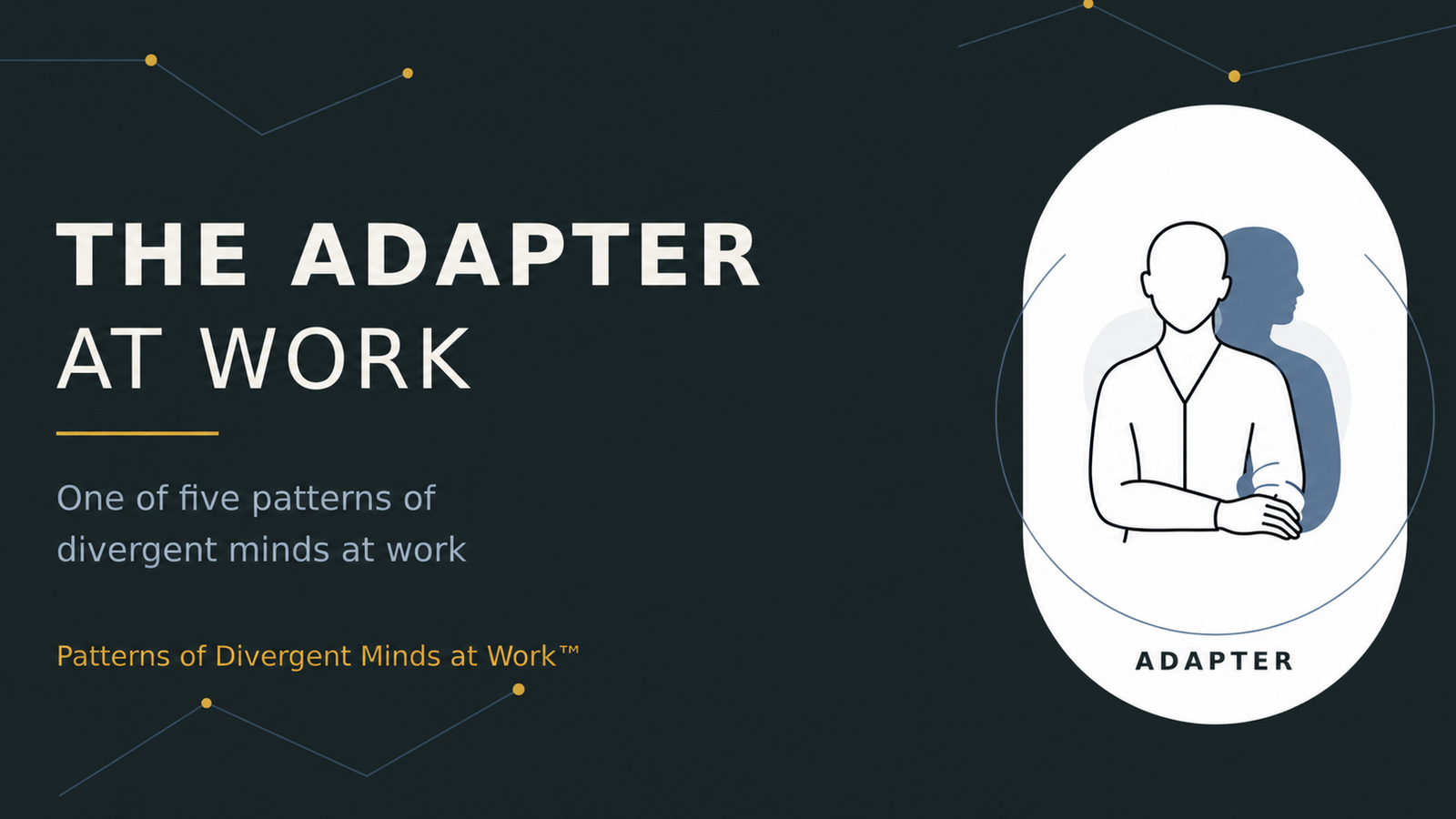
You walk into a meeting with a clear idea of what you want to say. Within minutes, the atmosphere changes. One person sounds impatient, someone else withdraws and a direct challenge no longer seems likely to move the conversation forward.
So you adjust. You shorten your explanation, change your tone and hold back part of your response until the timing feels better. The meeting continues, and nobody notices how many decisions you have made along the way.
Colleagues may describe you as perceptive, flexible or easy to work with. They see that you know how to communicate with different people and respond when the mood shifts. What they are less likely to see is the attention involved in tracking those shifts while also trying to participate, think and contribute.
Adaptability can be a genuine workplace strength. Yet when it becomes the expected response in almost every interaction, the internal work can accumulate quietly.
When adjusting to the room becomes second nature
The Adapter is one of the five Patterns of Divergent Minds at Work™. It describes a recurring workplace strategy of noticing people and context, then changing how you communicate or behave in response.
The Adapter emerged from patterns Cathy Rashidian has observed while coaching neurodivergent professionals. Close attention to social context can support effective communication while requiring substantial monitoring behind the scenes.
For some people, this may overlap with masking or camouflaging, particularly when the adjustment involves suppressing natural responses to meet workplace expectations. The Adapter is broader than masking and is not linked to a particular diagnosis.
Perhaps you present the same idea differently to a senior leader, a client, and a close colleague. During a tense discussion, you may sense that a direct challenge will create resistance, so you ask a question instead. You might also notice when someone needs more context, when a group is losing interest or when an unspoken concern is shaping the conversation.
This awareness can make you a thoughtful communicator. It helps you translate between perspectives, maintain relationships, and respond to situations that do not unfold as expected. In some teams, you may become the person who picks up on what others have missed and finds a way to keep the conversation moving.
Often, the shift in your approach happens almost instantly. You notice what the situation seems to call for and respond before consciously deciding to do so.
What effortless adaptability can hide
Reading the room is not a passive activity. While a meeting is underway, you may be listening to the discussion and simultaneously monitoring tone, facial expressions, expectations, and changes in energy. You are deciding how much enthusiasm to show, which details to include and whether your honest reaction will be useful or welcome.
The work involved is easy to miss. You may appear confident and comfortable even when you are uncertain or tense. Other people see the response that fits the moment, not the calculation behind it.
That hidden effort does not automatically mean that you are being false or masking. People naturally adjust their tone, level of detail or communication style based on the audience, purpose or time available. What matters is how much choice you have in the adjustment and what it requires you to keep out of view.
Masking or camouflaging becomes more relevant when you feel you must suppress natural responses, hide your needs or perform an expected version of yourself to avoid judgment, exclusion or negative consequences. Changing your approach because it helps you communicate is different from continually reshaping yourself to remain acceptable. From the outside, both may look like adaptability. What remains hidden is the effort involved—and whether you felt free to respond another way.
When everyone else’s expectations become easier to hear than your own
The cost of frequent adaptation is not always obvious in the moment. It may become clearer afterwards, once the conversation has ended and you finally have room to notice what was missing.
You might leave a meeting pleased that the discussion stayed productive, then realize you never shared your own view. You may accept an unrealistic deadline because flexibility seemed expected, only to recognize later that the work will exceed your capacity. At other times, you might project confidence because the team needs reassurance while keeping important concerns to yourself.
If this happens often, colleagues may assume you are comfortable, agreeable and able to accommodate whatever arises. They respond to what you have made visible. When uncertainty, disagreement or strain stays beneath the surface, they have little reason to know that more support, clarity or time is needed.
Workplace culture shapes this pattern too. In an environment where disagreement is punished, expectations remain unspoken or people are rewarded for anticipating every stakeholder preference, close monitoring can feel necessary. A safer culture gives people more room to ask what is expected, disagree respectfully, and show discomfort without risking their standing.
Bring your own needs back into the adjustment
You do not need to stop reading the room to understand how The Adapter Pattern is affecting you. Start by noticing what happens just before you change your response.
Ask yourself: Am I adapting because it works for me, or because I feel expected to?
The answer may not be straightforward. You may be responding to several things at once: the goal of the conversation, the needs of another person, previous experiences, and the consequences you expect if you do not adjust. Even so, the question creates a pause between noticing the room and automatically accommodating it.
Another useful reflection is: Where is adaptation helping me communicate, and where is it making my needs or views less visible?
You might discover that changing the language of an idea helps people understand it without costing you anything important. In another situation, softening your position may mean that your concern is never taken seriously. The behaviour can look similar from the outside while having a very different effect on you.
Try one small experiment in a situation where it feels safe. Before a meeting where you expect to adapt, write down one view, need or limit you do not want to lose. After the meeting, check whether it remained visible.
These small pauses bring intention back into a strategy that can otherwise run in the background. You may still adapt, but your own judgment has a clearer role in deciding how.
Let adaptability remain a strength without carrying the whole interaction
The Adapter pattern can help people feel understood and keep difficult conversations moving. It often makes you highly responsive to the needs of a team, client or stakeholder.
Problems arise when that responsiveness leaves little room for your perspective or asks you to manage the emotional conditions of every interaction. Appearing comfortable does not tell others whether you are comfortable. Communicating smoothly does not show how much monitoring was required to make the exchange feel smooth.
Your awareness of the room remains valuable. It becomes more sustainable when information from the room sits alongside information from you: what you think, what you need, what you have capacity for, and what you are no longer willing to leave unsaid.
Explore your Patterns of Divergent Minds at Work™
The Adapter is one of five Patterns of Divergent Minds at Work™. Together, the patterns offer a way to examine the strategies supporting your work, along with the demands that may be less visible to other people.
Take the free Patterns of Divergent Minds at Work™ inventory to see which patterns are currently showing up most strongly. After responding to 25 statements, you will receive a closer look at your two highest patterns, including what those strategies may be supporting, where strain may be developing, and one practical question to explore.
FAQs about The Adapter pattern at work
-
No. The Adapter is not linked to a particular diagnosis or neurotype. People may rely on this strategy for different reasons, including professional judgment, social expectations, previous experiences or a need to navigate an environment where expectations are unclear. The pattern describes a workplace response and not a diagnostic characteristic.
-
Not necessarily. Changing how you explain an idea for a particular audience can be a chosen communication strategy. Masking or camouflaging may involve suppressing natural responses or adopting expected behaviours to avoid negative judgment, exclusion or misunderstanding. The experiences can overlap, but they should not be treated as interchangeable.
-
Notice whether your views, needs or limits repeatedly disappear from conversations; whether interactions require substantial recovery afterward; or whether other people assume you agree, feel comfortable or have capacity when you do not. These may indicate that adaptation is no longer serving communication alone.